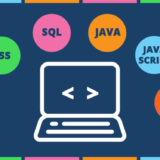
What does Programming mean?
Programming is the implementation of logic to facilitate specified computing operations and functionality. It occurs in one or more languages (c,c++, java etc), which differ by application, domain and programming model.
Programming language semantics and syntax are used when constructing an application. Thus, programming requires knowledge of application domains, algorithms and programming language expertise.
Programming language logic differs by developer. From a low level, high level, good code can be evaluated with factors such as:
- Robustness: Focuses on program continuation capability, regardless of errors or incorrect data
- Reliability: Focuses on correct design and algorithm implementation
- Efficiency: Focuses on memory, hardware or other properties used to optimize programs
- Readability: Proper documentation and indentation availability, which provides insight to other program developers or designers
Programming is the process of taking an algorithm and encoding it into a notation, a programming language, so that it can be executed by a computer. Although many programming languages and many different types of computers exist, the important first step is the need to have the solution. Without an algorithm there can be no program.
Programming, however, is an important part of what a computer scientist does. Programming is often the way that we create a representation for our solutions. Therefore, this language representation and the process of creating it becomes a fundamental part of the discipline.