|
((MARKS)) (1/2/3…) |
1 |
|
((QUESTION)) |
If the derived class is struct, then default visibility mode is _______ . |
|
((OPTION_A)) |
public |
|
((OPTION_B)) |
protected |
|
((OPTION_C)) |
private |
|
((OPTION_D)) |
struct can’t inherit class |
|
((CORRECT_CHOICE)) (A/B/C/D) |
A |
|
((MARKS)) (1/2/3…) |
1 |
|
((QUESTION)) |
If base class has constructor with arguments, then it is ________________ for the derived class to have constructor and pass the arguments to base class constructor. |
|
((OPTION_A)) |
Optional |
|
((OPTION_B)) |
Mandatory |
|
((OPTION_C)) |
Compiler dependent |
|
((OPTION_D)) |
Error |
|
((CORRECT_CHOICE)) (A/B/C/D) |
B |
|
((MARKS)) (1/2/3…) |
1 |
|
((QUESTION)) |
n case of inheritance where both base and derived class are having constructor and destructor, then which if the following are true ?
|
|
((OPTION_A)) |
Only 2 ,4 |
|
((OPTION_B)) |
Only 1 , 3 |
|
((OPTION_C)) |
Only 1 , 4 |
|
((OPTION_D)) |
Only 2, 3 |
|
((CORRECT_CHOICE)) (A/B/C/D) |
C |
|
((MARKS)) (1/2/3…) |
1 |
|
((QUESTION)) |
When a child class inherits traits from more than one parent class, this type of inheritance is called _______________ inheritance. |
|
((OPTION_A)) |
Hierarchical |
|
((OPTION_B)) |
Hybrid |
|
((OPTION_C)) |
Multilevel |
|
((OPTION_D)) |
Multiple |
|
((CORRECT_CHOICE)) (A/B/C/D) |
D |
|
((MARKS)) (1/2/3…) |
1 |
|
((QUESTION)) |
What is the difference between protected and private access specifiers in inheritance? |
|
((OPTION_A)) |
private member is not inheritable and not accessible in derived class. |
|
((OPTION_B)) |
protected member is inheritable and also accessible in derived class. |
|
((OPTION_C)) |
Both are inheritable but private is accessible in the derived class. |
|
((OPTION_D)) |
Both are inheritable but protected is not accessible in the derived class. |
|
((CORRECT_CHOICE)) (A/B/C/D) |
B |
|
((MARKS)) (1/2/3…) |
1 |
|
((QUESTION)) |
When a base class is privately inherited by the derived class, then_____________ . |
|
((OPTION_A)) |
protected members of the base class become private members of derived class |
|
((OPTION_B)) |
public members of the base class become private members of derived class |
|
((OPTION_C)) |
both a and b |
|
((OPTION_D)) |
only b |
|
((CORRECT_CHOICE)) (A/B/C/D) |
C |
|
((MARKS)) (1/2/3…) |
1 |
|
((QUESTION)) |
The derivation of Child class from Base class is indicated by ____ symbol. |
|
((OPTION_A)) |
:: |
|
((OPTION_B)) |
: |
|
((OPTION_C)) |
; |
|
((OPTION_D)) |
| |
|
((CORRECT_CHOICE)) (A/B/C/D) |
b |
|
((MARKS)) (1/2/3…) |
1 |
|
((QUESTION)) |
During a class inheritance in CPP, if the visibility mode or mode of derivation is not provided, then by default visibility mode is ___________. |
|
((OPTION_A)) |
public |
|
((OPTION_B)) |
protected |
|
((OPTION_C)) |
private |
|
((OPTION_D)) |
Friend |
|
((CORRECT_CHOICE)) (A/B/C/D) |
C |
|
((MARKS)) (1/2/3…) |
1 |
|
((QUESTION)) |
When base class is derived in protected mode, then_____________ .
|
|
((OPTION_A)) |
Only 1, 5 |
|
((OPTION_B)) |
Only 1, 6 |
|
((OPTION_C)) |
Only 2, 6 |
|
((OPTION_D)) |
Only 2, 4 |
|
((CORRECT_CHOICE)) (A/B/C/D) |
D |
|
((MARKS)) (1/2/3…) |
1 |
|
((QUESTION)) |
class X, class Y and class Z are derived from class BASE. This is ______ inheritance. |
|
((OPTION_A)) |
Multiple |
|
((OPTION_B)) |
Multilevel |
|
((OPTION_C)) |
Hierarchical |
|
((OPTION_D)) |
Single |
|
((CORRECT_CHOICE)) (A/B/C/D) |
C |
|
((MARKS)) (1/2/3…) |
1 |
|
((QUESTION)) |
Reusability of the code can be achieved in CPP through ______ . |
|
((OPTION_A)) |
Polymorphism |
|
((OPTION_B)) |
Encapsulation |
|
((OPTION_C)) |
Inheritance |
|
((OPTION_D)) |
Both a and c |
|
((CORRECT_CHOICE)) (A/B/C/D) |
C |
|
((MARKS)) (1/2/3…) |
1 |
|
((QUESTION)) |
What is meant by multiple inheritance? |
|
((OPTION_A)) |
Deriving a base class from derived class |
|
((OPTION_B)) |
Deriving a derived class from base class |
|
((OPTION_C)) |
Deriving a derived class from more than one base class |
|
((OPTION_D)) |
None of the mentioned |
|
((CORRECT_CHOICE)) (A/B/C/D) |
C |
|
((MARKS)) (1/2/3…) |
1 |
|
((QUESTION)) |
Which symbol is used to create multiple inheritance? |
|
((OPTION_A)) |
Dot |
|
((OPTION_B)) |
Comma |
|
((OPTION_C)) |
Dollar |
|
((OPTION_D)) |
None of the mentioned |
|
((CORRECT_CHOICE)) (A/B/C/D) |
B |
|
((MARKS)) (1/2/3…) |
1 |
|
((QUESTION)) |
Which of the following advantages we lose by using multiple inheritance? |
|
((OPTION_A)) |
Dynamic binding |
|
((OPTION_B)) |
Polymorphism |
|
((OPTION_C)) |
Both a & b |
|
((OPTION_D)) |
None of the mentioned |
|
((CORRECT_CHOICE)) (A/B/C/D) |
C |
|
((MARKS)) (1/2/3…) |
1 |
|
((QUESTION)) |
Which of the following is false with respect to inheritance? |
|
((OPTION_A)) |
When a base class is privately inherited,public members of the base class become private members of the derived class |
|
((OPTION_B)) |
When a base class is publicly inherited,public members of the base class becomes public members of derived class |
|
((OPTION_C)) |
When a base class is privately inherited,a private member of base class becomes private member of derived class |
|
((OPTION_D)) |
When a base class is publicly inherited protected members of base class becomes protected members of derived class |
|
((CORRECT_CHOICE)) (A/B/C/D) |
C |
|
((MARKS)) (1/2/3…) |
1 |
|
((QUESTION)) |
Which of the following is/are false |
|
((OPTION_A)) |
Inheritance is deriving new class from existing class |
|
((OPTION_B)) |
In an inheritance, all data and function members of base class are derived by derived class |
|
((OPTION_C)) |
We can specify which data and function members of base class will be inherited by derived class |
|
((OPTION_D)) |
We can add new functions to derived class without recompiling the base class |
|
((CORRECT_CHOICE)) (A/B/C/D) |
B |
|
((MARKS)) (1/2/3…) |
1 |
|
((QUESTION)) |
A base class will offer |
|
((OPTION_A)) |
offer more specific objects than its derived classes |
|
((OPTION_B)) |
correspond to something in the rest world |
|
((OPTION_C)) |
behave badly when the chops are down |
|
((OPTION_D)) |
be a generalized version of its derived classes |
|
((CORRECT_CHOICE)) (A/B/C/D) |
D |
|
((MARKS)) (1/2/3…) |
1 |
|
((QUESTION)) |
If a base class member access is public, and an inherited class accesses specifier is private, which of the following statement is true ? |
|
((OPTION_A)) |
The base class member can be accessed by derived class objects |
|
((OPTION_B)) |
The base class members cannot be accessed by the derived class members |
|
((OPTION_C)) |
The derived class members can be accessed by the base class objects |
|
((OPTION_D)) |
None of above |
|
((CORRECT_CHOICE)) (A/B/C/D) |
A |
|
((MARKS)) (1/2/3…) |
1 |
|
((QUESTION)) |
Choose most appropriate statement |
|
((OPTION_A)) |
An abstract base class can have pure virtual destructor |
|
((OPTION_B)) |
An abstract base class can have only virtual destructor |
|
((OPTION_C)) |
An abstract base class can have non virtual destructor |
|
((OPTION_D)) |
An abstract base class cannot have destructor |
|
((CORRECT_CHOICE)) (A/B/C/D) |
D |
|
((MARKS)) (1/2/3…) |
1 |
|
((QUESTION)) |
The conversion from basic data to class type can be done by ……. |
|
((OPTION_A)) |
Writing constructor |
|
((OPTION_B)) |
Is not possible |
|
((OPTION_C)) |
overloaded casting operator |
|
((OPTION_D)) |
object of a class |
|
((CORRECT_CHOICE)) (A/B/C/D) |
A |
|
((MARKS)) (1/2/3…) |
1 |
|
((QUESTION)) |
When a base class pointer points to derived class object? |
|
((OPTION_A)) |
It can access only base class members |
|
((OPTION_B)) |
It can access only derived class members |
|
((OPTION_C)) |
Both base class & derived class members |
|
((OPTION_D)) |
None |
|
((CORRECT_CHOICE)) (A/B/C/D) |
A |
|
((MARKS)) (1/2/3…) |
1 |
|
((QUESTION)) |
what is Hybrid Inheritance? |
|
((OPTION_A)) |
multiple inheritance |
|
((OPTION_B)) |
multilevel inheritance |
|
((OPTION_C)) |
multipath inheritance |
|
((OPTION_D)) |
combination of a and b |
|
((CORRECT_CHOICE)) (A/B/C/D) |
D |
|
((MARKS)) (1/2/3…) |
1 |
|
((QUESTION)) |
Which design patterns benefit from the multiple inheritance? |
|
((OPTION_A)) |
Adapter and observer pattern |
|
((OPTION_B)) |
Code pattern |
|
((OPTION_C)) |
Glue pattern |
|
((OPTION_D)) |
None of the mentioned |
|
((CORRECT_CHOICE)) (A/B/C/D) |
A |
|
((MARKS)) (1/2/3…) |
1 |
|
((QUESTION)) |
While overloading binary operators using member function, it requires ___ argument/s. |
|
((OPTION_A)) |
Zero |
|
((OPTION_B)) |
One |
|
((OPTION_C)) |
Two |
|
((OPTION_D)) |
Three |
|
((CORRECT_CHOICE)) (A/B/C/D) |
B |
|
((MARKS)) (1/2/3…) |
1 |
|
((QUESTION)) |
In case of operator overloading, operator function must be ______ .
|
|
((OPTION_A)) |
Only 2 |
|
((OPTION_B)) |
Only 1, 3 |
|
((OPTION_C)) |
Only 2 , 3 |
|
((OPTION_D)) |
All 1 , 2, 3 |
|
((CORRECT_CHOICE)) (A/B/C/D) |
C |
|
((MARKS)) (1/2/3…) |
1 |
|
((QUESTION)) |
Scope resolution operator is used______ . |
|
((OPTION_A)) |
to resolve the scope of global variables only |
|
((OPTION_B)) |
to resolve the scope of functions of the classes only |
|
((OPTION_C)) |
to resolve scope of global variables as well as functions of the classes |
|
((OPTION_D)) |
None of these |
|
((CORRECT_CHOICE)) (A/B/C/D) |
C |
|
((MARKS)) (1/2/3…) |
1 |
|
((QUESTION)) |
An operator function is created using _____________ keyword. |
|
((OPTION_A)) |
iterator |
|
((OPTION_B)) |
allocator |
|
((OPTION_C)) |
constructor |
|
((OPTION_D)) |
operator |
|
((CORRECT_CHOICE)) (A/B/C/D) |
D |
|
((MARKS)) (1/2/3…) |
1 |
|
((QUESTION)) |
Using friend operator function, following perfect set of operators may not be overloaded. |
|
((OPTION_A)) |
= , ( ) , [ ] , -> |
|
((OPTION_B)) |
<<, = = , [ ] , >> |
|
((OPTION_C)) |
?, = , ( ) , ++ |
|
((OPTION_D)) |
None of these |
|
((CORRECT_CHOICE)) (A/B/C/D) |
A |
|
((MARKS)) (1/2/3…) |
1 |
|
((QUESTION)) |
When overloading unary operators using Friend function, it requires_____ argument/s. |
|
((OPTION_A)) |
Zero |
|
((OPTION_B)) |
One |
|
((OPTION_C)) |
Two |
|
((OPTION_D)) |
None of these. |
|
((CORRECT_CHOICE)) (A/B/C/D) |
B |
|
((MARKS)) (1/2/3…) |
1 |
|
((QUESTION)) |
In case of binary operator overloading with member function, which of following statement should be taken into consideration? |
|
((OPTION_A)) |
Right hand operand must be object. |
|
((OPTION_B)) |
Left hand operand must be object. |
|
((OPTION_C)) |
Both the operands must be objects. |
|
((OPTION_D)) |
All of these should be considered. |
|
((CORRECT_CHOICE)) (A/B/C/D) |
B |
|
((MARKS)) (1/2/3…) |
1 |
|
((QUESTION)) |
Which of the following is the perfect set of operators that can’t be overloaded in CPP ? |
|
((OPTION_A)) |
+=, ?, :: , >> |
|
((OPTION_B)) |
>>, <<, ?, *, sizeof() |
|
((OPTION_C)) |
:: , . , .* , ?: |
|
((OPTION_D)) |
:: , ->, * , new, delete |
|
((CORRECT_CHOICE)) (A/B/C/D) |
C |
|
((MARKS)) (1/2/3…) |
1 |
|
((QUESTION)) |
How can we restrict dynamic allocation of objects of a class using new? |
|
((OPTION_A)) |
By overloading new operator |
|
((OPTION_B)) |
By making an empty private new operator. |
|
((OPTION_C)) |
By making an empty private new and new[] operators |
|
((OPTION_D)) |
By overloading new operator and new[] operators |
|
((CORRECT_CHOICE)) (A/B/C/D) |
C |
|
((MARKS)) (1/2/3…) |
1 |
|
((QUESTION)) |
Which of the following operators are overloaded by default by the compiler in every user defined classes even if user has not written? 1) Comparison Operator ( == ) 2) Assignment Operator ( = ) |
|
((OPTION_A)) |
Both 1 and 2 |
|
((OPTION_B)) |
Only 1 |
|
((OPTION_C)) |
Only 2 |
|
((OPTION_D)) |
None of the two |
|
((CORRECT_CHOICE)) (A/B/C/D) |
C |
|
((MARKS)) (1/2/3…) |
1 |
|
((QUESTION)) |
We can overload which of the following C++ operators. |
|
((OPTION_A)) |
Arithmetic operator (+, -, *, /) |
|
((OPTION_B)) |
Class Member Access Operators (., .*) |
|
((OPTION_C)) |
Size operator(sizeof) |
|
((OPTION_D)) |
Conditional operator(?:) |
|
((CORRECT_CHOICE)) (A/B/C/D) |
A |
|
((MARKS)) (1/2/3…) |
1 |
|
((QUESTION)) |
Operator overloading is also called …………….. polymorphism. |
|
((OPTION_A)) |
run time |
|
((OPTION_B)) |
initial time |
|
((OPTION_C)) |
compile time |
|
((OPTION_D)) |
completion time |
|
((CORRECT_CHOICE)) (A/B/C/D) |
C |
|
((MARKS)) (1/2/3…) |
1 |
|
((QUESTION)) |
Which of the following is the correct order involves in the process of operator overloading. |
|
((OPTION_A)) |
1-i, 2-ii, 3-iii |
|
((OPTION_B)) |
1-ii, 2-iii, 3-i |
|
((OPTION_C)) |
1-ii, 2-i, 2-iii |
|
((OPTION_D)) |
1-iii, 2-ii, 3-i |
|
((CORRECT_CHOICE)) (A/B/C/D) |
B |
|
((MARKS)) (1/2/3…) |
1 |
|
((QUESTION)) |
State whether the following statements are True or False for overloading operators. |
|
((OPTION_A)) |
True, True |
|
((OPTION_B)) |
True, False |
|
((OPTION_C)) |
False, True |
|
((OPTION_D)) |
False, False |
|
((CORRECT_CHOICE)) (A/B/C/D) |
B |
|
((MARKS)) (1/2/3…) |
1 |
|
((QUESTION)) |
We cannot use friend functions to overload which of the following operators. |
|
((OPTION_A)) |
i and ii only |
|
((OPTION_B)) |
ii and iii only |
|
((OPTION_C)) |
iii and iv only |
|
((OPTION_D)) |
i and iv only |
|
((CORRECT_CHOICE)) (A/B/C/D) |
B |
|
((MARKS)) (1/2/3…) |
1 |
|
((QUESTION)) |
…………… overloaded by means of a member function, take no explicit arguments and return no explicit values. |
|
((OPTION_A)) |
Unary operators |
|
((OPTION_B)) |
Binary operators |
|
((OPTION_C)) |
Arithmetic operators |
|
((OPTION_D)) |
Function operator |
|
((CORRECT_CHOICE)) (A/B/C/D) |
A |
|
((MARKS)) (1/2/3…) |
1 |
|
((QUESTION)) |
……………. overloaded through a member function take one explicit argument and those which are overloaded through a friend function take two explicit arguments. |
|
((OPTION_A)) |
Unary operators |
|
((OPTION_B)) |
Binary operators |
|
((OPTION_C)) |
Arithmetic operators |
|
((OPTION_D)) |
Function operator |
|
((CORRECT_CHOICE)) (A/B/C/D) |
B |
|
((MARKS)) (1/2/3…) |
1 |
|
((QUESTION)) |
When using ………………., overloaded through a member function, the left hand operand must be an object of the relevant class. |
|
((OPTION_A)) |
Unary operators |
|
((OPTION_B)) |
Binary operators |
|
((OPTION_C)) |
Arithmetic operators |
|
((OPTION_D)) |
Function operator |
|
((CORRECT_CHOICE)) (A/B/C/D) |
B |
|
((MARKS)) (1/2/3…) |
1 |
|
((QUESTION)) |
Operator overloading is done with the help of a special function called ……………, which describes the special task of an operator. |
|
((OPTION_A)) |
overloading function |
|
((OPTION_B)) |
special task function |
|
((OPTION_C)) |
detail function |
|
((OPTION_D)) |
operator function |
|
((CORRECT_CHOICE)) (A/B/C/D) |
D |
|
((MARKS)) (1/2/3…) |
1 |
|
((QUESTION)) |
The casting operator function should satisfy which of the following conditions. |
|
((OPTION_A)) |
i and ii only |
|
((OPTION_B)) |
ii and iii only |
|
((OPTION_C)) |
i, iii only |
|
((OPTION_D)) |
All i, ii and iii |
|
((CORRECT_CHOICE)) (A/B/C/D) |
D |
|
((MARKS)) (1/2/3…) |
1 |
|
((QUESTION)) |
Operator overloading provides a flexible option for the creation of new …………….. for most of the C++ operations. |
|
((OPTION_A)) |
class |
|
((OPTION_B)) |
function |
|
((OPTION_C)) |
object |
|
((OPTION_D)) |
definitions |
|
((CORRECT_CHOICE)) (A/B/C/D) |
D |
|
((MARKS)) (1/2/3…) |
1 |
|
((QUESTION)) |
Overloading the function operator |
|
((OPTION_A)) |
requires a class with an overloaded operator. |
|
((OPTION_B)) |
requires a class with an overloaded [ ] operator. |
|
((OPTION_C)) |
allows you to create objects that act syntactically like functions |
|
((OPTION_D)) |
usually make use of a constructor that takes arguments. |
|
((CORRECT_CHOICE)) (A/B/C/D) |
A |
|
((MARKS)) (1/2/3…) |
1 |
|
((QUESTION)) |
Mechanism of deriving a class from another derived class is known as____ |
|
((OPTION_A)) |
Polymorphism |
|
((OPTION_B)) |
Single Inheritance |
|
((OPTION_C)) |
Multilevel Inheritance |
|
((OPTION_D)) |
Message Passing |
|
((CORRECT_CHOICE)) (A/B/C/D) |
C |
|
((MARKS)) (1/2/3…) |
1 |
|
((QUESTION)) |
The major goal of inheritance in c++ is: |
|
((OPTION_A)) |
To facilitate the conversion of data types. |
|
((OPTION_B)) |
To help modular programming. |
|
((OPTION_C)) |
To extend the capabilities of a class. |
|
((OPTION_D)) |
To hide the details of base class. |
|
((CORRECT_CHOICE)) (A/B/C/D) |
C |
|
((MARKS)) (1/2/3…) |
1 |
|
((QUESTION)) |
What is the return type of the conversion operator? |
|
((OPTION_A)) |
void |
|
((OPTION_B)) |
int |
|
((OPTION_C)) |
float |
|
((OPTION_D)) |
no return type |
|
((CORRECT_CHOICE)) (A/B/C/D) |
D |
|
((MARKS)) (1/2/3…) |
1 |
|
((QUESTION)) |
Why we use the “dynamic_cast” type conversion? |
|
((OPTION_A)) |
result of the type conversion is a valid |
|
((OPTION_B)) |
to be used in low memory |
|
((OPTION_C)) |
result of the type conversion is a invalid |
|
((OPTION_D)) |
None of the mentioned |
|
((CORRECT_CHOICE)) (A/B/C/D) |
A |
|
((MARKS)) (1/2/3…) |
1 |
|
((QUESTION)) |
How many parameters does a conversion operator may take? |
|
((OPTION_A)) |
0 |
|
((OPTION_B)) |
1 |
|
((OPTION_C)) |
2 |
|
((OPTION_D)) |
as many as possible |
|
((CORRECT_CHOICE)) (A/B/C/D) |
A |
|
((MARKS)) (1/2/3…) |
1 |
|
((QUESTION)) |
How many types are there in user defined conversion? |
|
((OPTION_A)) |
1 |
|
((OPTION_B)) |
2 |
|
((OPTION_C)) |
3 |
|
((OPTION_D)) |
4 |
|
((CORRECT_CHOICE)) (A/B/C/D) |
B |
|
((MARKS)) (1/2/3…) |
1 |
|
((QUESTION)) |
Pick out the correct syntax of operator conversion. |
|
((OPTION_A)) |
Operatorfloat()const |
|
((OPTION_B)) |
operator float() |
|
((OPTION_C)) |
operator const |
|
((OPTION_D)) |
None of the mentioned |
|
((CORRECT_CHOICE)) (A/B/C/D) |
A |
|
((MARKS)) (1/2/3…) |
1 |
|
((QUESTION)) |
How to create a dynamic array of pointers (to integers) of size 10 using new in C++? |
|
((OPTION_A)) |
int *arr = new int *[10]; |
|
((OPTION_B)) |
int **arr = new int *[10]; |
|
((OPTION_C)) |
int *arr = new int [10]; |
|
((OPTION_D)) |
Not Possible |
|
((CORRECT_CHOICE)) (A/B/C/D) |
B |
|
((MARKS)) (1/2/3…) |
1 |
|
((QUESTION)) |
Which of the following is true about new when compared with malloc.
3) new returns appropriate pointer, malloc returns void * and pointer needs to typecast to appropriate type. |
|
((OPTION_A)) |
1 and 3 |
|
((OPTION_B)) |
2 and 3 |
|
((OPTION_C)) |
1 and 2 |
|
((OPTION_D)) |
All 1, 2 and 3 |
|
((CORRECT_CHOICE)) (A/B/C/D) |
D |
|
((MARKS)) (1/2/3…) |
1 |
|
|
((QUESTION)) |
Which of the following type of class allows only one object of it to be created? |
|
|
((OPTION_A)) |
|
|
|
((OPTION_B)) |
Abstract class |
|
|
((OPTION_C)) |
Singleton class |
|
|
((OPTION_D)) |
Friend class |
|
|
((CORRECT_CHOICE)) (A/B/C/D) |
C |
|
|
|
|
|
((MARKS)) (1/2/3…) |
1 |
||
|
((QUESTION)) |
2.Which of the following is not a type of constructor? |
||
|
((OPTION_A)) |
|
||
|
((OPTION_B)) |
Friend constructor |
||
|
((OPTION_C)) |
Default constructor |
||
|
((OPTION_D)) |
Parameterized constructor |
||
|
((CORRECT_CHOICE)) (A/B/C/D) |
B |
||
|
|
|
|
((MARKS)) (1/2/3…) |
1 |
|
|
((QUESTION)) |
Which of the following statements is correct? |
|
|
((OPTION_A)) |
|
|
|
((OPTION_B)) |
Derived class pointer cannot point to base class. |
|
|
((OPTION_C)) |
Pointer to derived class cannot be created. |
|
|
((OPTION_D)) |
Pointer to base class cannot be created. |
|
|
((CORRECT_CHOICE)) (A/B/C/D) |
B |
|
|
|
|
|
|
((CORRECT_CHOICE)) (A/B/C/D) |
|
|
|
|
|
|
((MARKS)) (1/2/3…) |
1 |
|
|
((QUESTION)) |
Which of the following is not the member of class? |
|
|
((OPTION_A)) |
|
|
|
((OPTION_B)) |
Friend function |
|
|
((OPTION_C)) |
Const function |
|
|
((OPTION_D)) |
Virtual function |
|
|
((CORRECT_CHOICE)) (A/B/C/D) |
B |
|
|
|
|
|
((MARKS)) (1/2/3…) |
1 |
|
((QUESTION)) |
Pick the other name of operator function. |
|
((OPTION_A)) |
function overloading |
|
((OPTION_B)) |
operator overloading |
|
((OPTION_C)) |
member overloading |
|
((OPTION_D)) |
None of the mentioned |
|
((CORRECT_CHOICE)) (A/B/C/D) |
D |
|
((MARKS)) (1/2/3…) |
1 |
|
((QUESTION)) |
Which of the following operators can’t be overloaded? |
|
((OPTION_A)) |
:: |
|
((OPTION_B)) |
+ |
|
((OPTION_C)) |
– |
|
((OPTION_D)) |
[] |
|
((CORRECT_CHOICE)) (A/B/C/D) |
A |
|
((MARKS)) (1/2/3…) |
1 |
|
((QUESTION)) |
How to declare operator function? |
|
((OPTION_A)) |
operator operator sign |
|
((OPTION_B)) |
operator |
|
((OPTION_C)) |
operator sign |
|
((OPTION_D)) |
None of the mentioned |
|
((CORRECT_CHOICE)) (A/B/C/D) |
A |
|
((MARKS)) (1/2/3…) |
1 |
|
((QUESTION)) |
Which of the following statements is NOT valid about operator overloading? |
|
((OPTION_A)) |
Only existing operators can be overloaded. |
|
((OPTION_B)) |
Overloaded operator must have at least one operand of its class type. |
|
((OPTION_C)) |
The overloaded operators follow the syntax rules of the original operator. |
|
((OPTION_D)) |
None of the mentioned |
|
((CORRECT_CHOICE)) (A/B/C/D) |
D |
|
((MARKS)) (1/2/3…) |
1 |
|
((QUESTION)) |
Operator overloading is |
|
((OPTION_A)) |
making c++ operator works with objects |
|
((OPTION_B)) |
giving new meaning to existing operator |
|
((OPTION_C)) |
making new operator |
|
((OPTION_D)) |
both a & b |
|
((CORRECT_CHOICE)) (A/B/C/D) |
D |
|
((MARKS)) (1/2/3…) |
1 |
|
((QUESTION)) |
What is the #include <iostream> using namespace std; ostream & operator<<(ostream & i, int n) { return i; } int main() { cout << 5 << endl; cin.get(); return 0; } output of this program? |
|
((OPTION_A)) |
5 |
|
((OPTION_B)) |
6 |
|
((OPTION_C)) |
error |
|
((OPTION_D)) |
runtime error |
|
((CORRECT_CHOICE)) (A/B/C/D) |
C |
|
((MARKS)) (1/2/3…) |
1 |
|
((QUESTION)) |
You can redefine the way _______ work when used with objects. |
|
((OPTION_A)) |
none of these |
|
((OPTION_B)) |
white space characters |
|
((OPTION_C)) |
standard operators |
|
((OPTION_D)) |
pre-processor directives |
|
((CORRECT_CHOICE)) (A/B/C/D) |
C |
|
((MARKS)) (1/2/3…) |
1 |
|
((QUESTION)) |
In Turbo C++, if you overload only prefix ++ operator, the postfix ++ operator ________. |
|
((OPTION_A)) |
does not work |
|
((OPTION_B)) |
works arbitrarily |
|
((OPTION_C)) |
works naturally |
|
((OPTION_D)) |
works as if prefix ++ operator |
|
((CORRECT_CHOICE)) (A/B/C/D) |
D |
|
((MARKS)) (1/2/3…) |
1 |
|
((QUESTION)) |
Why we use the “dynamic_cast” type conversion? |
|
((OPTION_A)) |
result of the type conversion is a valid |
|
((OPTION_B)) |
to be used in low memory |
|
((OPTION_C)) |
result of the type conversion is a invalid |
|
((OPTION_D)) |
None of the mentioned |
|
((CORRECT_CHOICE)) (A/B/C/D) |
A |
|
((MARKS)) (1/2/3…) |
1 |
|
((QUESTION)) |
Which is used to create a pure virtual function ? |
|
((OPTION_A)) |
) $ |
|
((OPTION_B)) |
=0 |
|
((OPTION_C)) |
& |
|
((OPTION_D)) |
! |
|
((CORRECT_CHOICE)) (A/B/C/D) |
B |
|
((MARKS)) (1/2/3…) |
1 |
|
((QUESTION)) |
Which is also called as abstract class? |
|
((OPTION_A)) |
virtual function |
|
((OPTION_B)) |
pure virtual function |
|
((OPTION_C)) |
derived class |
|
((OPTION_D)) |
None of the mentioned |
|
((CORRECT_CHOICE)) (A/B/C/D) |
B |
|
((MARKS)) (1/2/3…) |
1 |
|
((QUESTION)) |
What is meant by pure virtual function? |
|
((OPTION_A)) |
Function which does not have definition of its own.) |
|
((OPTION_B)) |
Function which does have definition of its own. |
|
((OPTION_C)) |
Function which does not have any return type. |
|
((OPTION_D)) |
None of the mentioned |
|
((CORRECT_CHOICE)) (A/B/C/D) |
A |
|
((MARKS)) (1/2/3…) |
1 |
|
((QUESTION)) |
Pick out the correct option. |
|
((OPTION_A)) |
We cannot make an instance of an abstract base class |
|
((OPTION_B)) |
We can make an instance of an abstract base class |
|
((OPTION_C)) |
Both a & b |
|
((OPTION_D)) |
None of the mentioned |
|
((CORRECT_CHOICE)) (A/B/C/D) |
A |
|
((MARKS)) (1/2/3…) |
1 |
|
((QUESTION)) |
Where does the abstract class is used? |
|
((OPTION_A)) |
base class only |
|
((OPTION_B)) |
derived class |
|
((OPTION_C)) |
both a & b |
|
((OPTION_D)) |
None of the mentioned |
|
((CORRECT_CHOICE)) (A/B/C/D) |
A |
|
((MARKS)) (1/2/3…) |
1 |
|
((QUESTION)) |
How many access specifiers are there in c++? |
|
((OPTION_A)) |
1 |
|
((OPTION_B)) |
2 |
|
((OPTION_C)) |
3 |
|
((OPTION_D)) |
4 |
|
((CORRECT_CHOICE)) (A/B/C/D) |
C |
|
((MARKS)) (1/2/3…) |
1 |
|
((QUESTION)) |
What is the default access level to a block of data? |
|
((OPTION_A)) |
Public |
|
((OPTION_B)) |
Protected |
|
((OPTION_C)) |
Private |
|
((OPTION_D)) |
None of the mentioned |
|
((CORRECT_CHOICE)) (A/B/C/D) |
C |
|
((MARKS)) (1/2/3…) |
1 |
|||||||||||||||
|
((QUESTION)) |
A pointer to the base class can hold address of |
|||||||||||||||
|
((OPTION_A)) |
|
|||||||||||||||
|
((OPTION_B)) |
only derived class object | |||||||||||||||
|
((OPTION_C)) |
base class object as well as derived class object | |||||||||||||||
|
((OPTION_D)) |
None of the above | |||||||||||||||
|
((CORRECT_CHOICE)) (A/B/C/D) |
C | |||||||||||||||
|
|
|
|||||||||||||||
|
((MARKS)) (1/2/3…) |
1 |
|||||||||
|
((QUESTION)) |
Use of virtual functions implies |
|||||||||
|
((OPTION_A)) |
|
|||||||||
|
((OPTION_B)) |
overriding. | |||||||||
|
((OPTION_C)) |
static binding. | |||||||||
|
((OPTION_D)) |
dynamic binding. | |||||||||
|
((CORRECT_CHOICE)) (A/B/C/D) |
D | |||||||||
|
|
|
|||||||||
|
((MARKS)) (1/2/3…) |
1 |
|
|
((QUESTION)) |
Pure virtual functions |
|
|
((OPTION_A)) |
|
|
|
((OPTION_B)) |
cannot have public access specification. | |
|
((OPTION_C)) |
are mandatory for a virtual class. | |
|
((OPTION_D)) |
None of the above. | |
|
((CORRECT_CHOICE)) (A/B/C/D) |
A | |
|
|
|
|
((MARKS)) (1/2/3…) |
1 |
|||||||||
|
((QUESTION)) |
A struct is the same as a class except that |
|||||||||
|
((OPTION_A)) |
|
|||||||||
|
((OPTION_B)) |
all members are public. | |||||||||
|
((OPTION_C)) |
cannot be used in inheritance hierarchy. | |||||||||
|
((OPTION_D)) |
it does have a this pointer. | |||||||||
|
((CORRECT_CHOICE)) (A/B/C/D) |
C | |||||||||
|
|
|
|||||||||
|
((MARKS)) (1/2/3…) |
1 |
|
|
((QUESTION)) |
The keyword friend does not appear in |
|
|
((OPTION_A)) |
|
|
|
((OPTION_B)) |
the class desiring access to another class. |
|
|
((OPTION_C)) |
the private section of a class. |
|
|
((OPTION_D)) |
the public section of a class. |
|
|
((CORRECT_CHOICE)) (A/B/C/D) |
C |
|
|
|
|
|
((MARKS)) (1/2/3…) |
1 |
||||||
|
((QUESTION)) |
RunTime Polymorphism is achieved by ______ |
||||||
|
((OPTION_A)) |
|
||||||
|
((OPTION_B)) |
virtual function |
||||||
|
((OPTION_C)) |
operator overloading |
||||||
|
((OPTION_D)) |
function overloading |
||||||
|
((CORRECT_CHOICE)) (A/B/C/D) |
B |
||||||
|
|
|
||||||
|
((MARKS)) (1/2/3…) |
1 |
||||||||
|
((QUESTION)) |
If a class C is derived from class B, which is derived from class A, all through public inheritance, then a class C member function can access |
||||||||
|
((OPTION_A)) |
|
||||||||
|
((OPTION_B)) |
protected and public data only in C. |
||||||||
|
((OPTION_C)) |
private data in A and B. |
||||||||
|
((OPTION_D)) |
protected data in A and B. |
||||||||
|
((CORRECT_CHOICE)) (A/B/C/D) |
D |
||||||||
|
|
|
||||||||
|
((MARKS)) (1/2/3…) |
1 |
|
|
((QUESTION)) |
The process of building new classes from existing one is called ______. |
|
|
((OPTION_A)) |
|
|
|
((OPTION_B)) |
Structure |
|
|
((OPTION_C)) |
Inheritance |
|
|
((OPTION_D)) |
Cascading |
|
|
((CORRECT_CHOICE)) (A/B/C/D) |
C |
|
|
|
|
|
((MARKS)) (1/2/3…) |
1 |
||||||
|
((QUESTION)) |
Which of the following is an invalid visibility label while inheriting a class? |
||||||
|
((OPTION_A)) |
|
||||||
|
((OPTION_B)) |
private |
||||||
|
((OPTION_C)) |
protected |
||||||
|
((OPTION_D)) |
friend |
||||||
|
((CORRECT_CHOICE)) (A/B/C/D) |
D |
||||||
|
|
|
|
((MARKS)) (1/2/3…) |
1 |
||||||||||||||||||
|
((QUESTION)) |
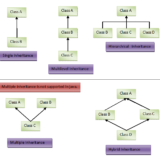
|
||||||||||||||||||
|
((OPTION_A)) |
|
||||||||||||||||||
|
((OPTION_B)) |
Multiple inheritance |
||||||||||||||||||
|
((OPTION_C)) |
Hybrid inheritance |
||||||||||||||||||
|
((OPTION_D)) |
Hierarchical Inheritance |
||||||||||||||||||
|
((CORRECT_CHOICE)) (A/B/C/D) |
B |
||||||||||||||||||
|
|
|
||||||||||||||||||
|
((MARKS)) (1/2/3…) |
1 |
|
|
((QUESTION)) |
Which of the following keyword is used to overload an operator? |
|
|
((OPTION_A)) |
|
|
|
((OPTION_B)) |
operator |
|
|
((OPTION_C)) |
friend |
|
|
((OPTION_D)) |
override |
|
|
((CORRECT_CHOICE)) (A/B/C/D) |
B |
|
|
|
|
|
((MARKS)) (1/2/3…) |
1 |
||||
|
((QUESTION)) |
|
||||
|
((OPTION_A)) |
|
||||
|
((OPTION_B)) |
virtual void Display = 0; |
||||
|
((OPTION_C)) |
virtual void Display(void) = 0; |
||||
|
((OPTION_D)) |
Void Display(void) = 0; |
||||
|
((CORRECT_CHOICE)) (A/B/C/D) |
C |
||||
|
|
|
||||
|
((MARKS)) (1/2/3…) |
1 |
|
|
((QUESTION)) |
Which of the following is not a type of inheritance? |
|
|
((OPTION_A)) |
|
|
|
((OPTION_B)) |
Multilevel |
|
|
((OPTION_C)) |
Distributive |
|
|
((OPTION_D)) |
Hierarchical |
|
|
((CORRECT_CHOICE)) (A/B/C/D) |
C |
|
|
|
|
|
((MARKS)) (1/2/3…) |
1 |
|
|
((QUESTION)) |
Which of the following are available only in the class hierarchy chain? |
|
|
((OPTION_A)) |
|
|
|
((OPTION_B)) |
Private data members |
|
|
((OPTION_C)) |
Protected data members |
|
|
((OPTION_D)) |
Member functions |
|
|
((CORRECT_CHOICE)) (A/B/C/D) |
C |
|
|
|
|
|
((MARKS)) (1/2/3…) |
1 |
||||||||||||||||||||||||||||||
|
((QUESTION)) |
What happens if the base and derived class contains definition of a function with same prototype? |
||||||||||||||||||||||||||||||
|
((OPTION_A)) |
|
||||||||||||||||||||||||||||||
|
((OPTION_B)) |
Only base class function will get called irrespective of object. |
||||||||||||||||||||||||||||||
|
((OPTION_C)) |
Only derived class function will get called irrespective of object. |
||||||||||||||||||||||||||||||
|
((OPTION_D)) |
Base class object will call base class function and derived class object will call derived class function. |
||||||||||||||||||||||||||||||
|
((CORRECT_CHOICE)) (A/B/C/D) |
D |
||||||||||||||||||||||||||||||
|
|
|
||||||||||||||||||||||||||||||
|
((MARKS)) (1/2/3…) |
1 |
|||||||||
|
((QUESTION)) |
|
|||||||||
|
((OPTION_A)) |
|
|||||||||
|
((OPTION_B)) |
Both I and II are false. |
|||||||||
|
((OPTION_C)) |
Only II is true. |
|||||||||
|
((OPTION_D)) |
Both I and II are true. |
|||||||||
|
((CORRECT_CHOICE)) (A/B/C/D) |
B |
|||||||||
|
|
|
|||||||||
|
((MARKS)) (1/2/3…) |
1 |
|
|
((QUESTION)) |
Which of the following is a mechanism of static polymorphism? |
|
|
((OPTION_A)) |
|
|
|
((OPTION_B)) |
Function overloading |
|
|
((OPTION_C)) |
Templates |
|
|
((OPTION_D)) |
All of the above |
|
|
((CORRECT_CHOICE)) (A/B/C/D) |
D |
|
|
|
|
|
((MARKS)) (1/2/3…) |
1 |
|
|
((QUESTION)) |
Which of the following concepts is used to implement late binding? |
|
|
((OPTION_A)) |
|
|
|
((OPTION_B)) |
Operator function |
|
|
((OPTION_C)) |
Const function |
|
|
((OPTION_D)) |
Static function |
|
|
((CORRECT_CHOICE)) (A/B/C/D) |
A |
|
|
|
|
|
((MARKS)) (1/2/3…) |
1 |
||
|
((QUESTION)) |
Which of the following cannot be used with the keyword virtual? |
||
|
((OPTION_A)) |
|
||
|
((OPTION_B)) |
member functions |
||
|
((OPTION_C)) |
constructor |
||
|
((OPTION_D)) |
destructor |
||
|
((CORRECT_CHOICE)) (A/B/C/D) |
C |
||
|
|
|
|
((MARKS)) (1/2/3…) |
1 |
|
|
((QUESTION)) |
Which of the following operator is overloaded for object cout? |
|
|
((OPTION_A)) |
|
|
|
((OPTION_B)) |
<< |
|
|
((OPTION_C)) |
+ |
|
|
((OPTION_D)) |
= |
|
|
((CORRECT_CHOICE)) (A/B/C/D) |
B |
|
|
|
|
|
((MARKS)) (1/2/3…) |
1 |
||
|
((QUESTION)) |
How “Late binding” is implemented in C++? |
||
|
((OPTION_A)) |
|
||
|
((OPTION_B)) |
Using Virtual tables |
||
|
((OPTION_C)) |
Using polymorphic tables |
||
|
((OPTION_D)) |
Using Indexed virtual tables |
||
|
((CORRECT_CHOICE)) (A/B/C/D) |
B |
||
|
|
|
|
((MARKS)) (1/2/3…) |
1 |
|||||||||||||||
|
((QUESTION)) |
Which of the following is correct about class and structure? |
|||||||||||||||
|
((OPTION_A)) |
|
|||||||||||||||
|
((OPTION_B)) |
class data members are public by default while that of structure are private |
|||||||||||||||
|
((OPTION_C)) |
Pointer to structure or classes cannot be declared. |
|||||||||||||||
|
((OPTION_D)) |
Class data members are private by default while that of structure are public by default. |
|||||||||||||||
|
((CORRECT_CHOICE)) (A/B/C/D) |
D |
|||||||||||||||
|
|
|
|||||||||||||||
|
((MARKS)) (1/2/3…) |
1 |
|
|
((QUESTION)) |
Which of the following is correct about function overloading? |
|
|
((OPTION_A)) |
|
|
|
((OPTION_B)) |
The order of argument is different. |
|
|
((OPTION_C)) |
The number of argument is same. |
|
|
((OPTION_D)) |
Both A and B. |
|
|
((CORRECT_CHOICE)) (A/B/C/D) |
D |
|
|
|
|
|
((MARKS)) (1/2/3…) |
1 |
|
((QUESTION)) |
Operator overloading is ? |
|
((OPTION_A)) |
giving new meaning to existing c++ operators |
|
((OPTION_B)) |
making c++ operators work with objects |
|
((OPTION_C)) |
giving c++ operators more than they can handle |
|
((OPTION_D)) |
making new c++ operators |
|
((CORRECT_CHOICE)) (A/B/C/D) |
A |
|
((MARKS)) (1/2/3…) |
1 |
|
((QUESTION)) |
A base class will offer |
|
((OPTION_A)) |
Offer more specific objects than its derived classes |
|
((OPTION_B)) |
correspond to something in the rest world |
|
((OPTION_C)) |
behave badly when the chops are down |
|
((OPTION_D)) |
be a generalized version of its derived classes |
|
((CORRECT_CHOICE)) (A/B/C/D) |
D |
|
((MARKS)) (1/2/3…) |
1 |
|
((QUESTION)) |
Choose most appropriate statement |
|
((OPTION_A)) |
An abstract base class can have pure virtual destructor |
|
((OPTION_B)) |
An abstract base class can have only virtual destructor |
|
((OPTION_C)) |
An abstract base class can have non virtual destructor |
|
((OPTION_D)) |
An abstract base class cannot have destructor |
|
((CORRECT_CHOICE)) (A/B/C/D) |
D |
|
((MARKS)) (1/2/3…) |
1 |
|
((QUESTION)) |
Can we pass parameters to base class constructor though derived class or derived class constructor? |
|
((OPTION_A)) |
Yes |
|
((OPTION_B)) |
No |
|
((CORRECT_CHOICE)) (A/B/C/D) |
A |
|
((MARKS)) (1/2/3…) |
1 |
|
((QUESTION)) |
Private members of the class are not inheritable. |
|
((OPTION_A)) |
True |
|
((OPTION_B)) |
False |
|
((CORRECT_CHOICE)) (A/B/C/D) |
B |
|
((MARKS)) (1/2/3…) |
1 |
|
((QUESTION)) |
Can struct be used as Base class for inheritance ? |
|
((OPTION_A)) |
Yes |
|
((OPTION_B)) |
No |
|
((CORRECT_CHOICE)) (A/B/C/D) |
A |
|
((MARKS)) (1/2/3…) |
1 |
|
((QUESTION)) |
The ……………. inherits some or all of the properties of the ……….. class. |
|
((OPTION_A)) |
base, derived |
|
((OPTION_B)) |
derived, base |
|
((OPTION_C)) |
derived, initial |
|
((OPTION_D)) |
base, final |
|
((CORRECT_CHOICE)) (A/B/C/D) |
B |
|
((MARKS)) (1/2/3…) |
1 |
|
((QUESTION)) |
A derived class with only one base class is called …………… inheritance. |
|
((OPTION_A)) |
single |
|
((OPTION_B)) |
multiple |
|
((OPTION_C)) |
multilevel |
|
((OPTION_D)) |
hierarchical |
|
((CORRECT_CHOICE)) (A/B/C/D) |
A |
|
((MARKS)) (1/2/3…) |
1 |
|
((QUESTION)) |
A class can inherit properties from more than one class which is known as ……….inheritance. |
|
((OPTION_A)) |
single |
|
((OPTION_B)) |
multiple |
|
((OPTION_C)) |
multilevel |
|
((OPTION_D)) |
hierarchical |
|
((CORRECT_CHOICE)) (A/B/C/D) |
B |
|
((MARKS)) (1/2/3…) |
1 |
|
((QUESTION)) |
State whether the following statements about inheritance are True or False. |
|
((OPTION_A)) |
True, False |
|
((OPTION_B)) |
False, True |
|
((OPTION_C)) |
True, True |
|
((OPTION_D)) |
False, False |
|
((CORRECT_CHOICE)) (A/B/C/D) |
C |
|
((MARKS)) (1/2/3…) |
1 |
|
((QUESTION)) |
When the base class is publicly inherited, public members of the base class become …………. of the derived class. |
|
((OPTION_A)) |
private members |
|
((OPTION_B)) |
protected members |
|
((OPTION_C)) |
Public members |
|
((OPTION_D)) |
Not inherited |
|
((CORRECT_CHOICE)) (A/B/C/D) |
C |
|
((MARKS)) (1/2/3…) |
1 |
|
((QUESTION)) |
In protected derivation, both the public and protected members of the base class become …………. members of the derived class. |
|
((OPTION_A)) |
protected |
|
((OPTION_B)) |
private |
|
((OPTION_C)) |
public |
|
((OPTION_D)) |
friend |
|
((CORRECT_CHOICE)) (A/B/C/D) |
A |
|
((MARKS)) (1/2/3…) |
1 |
|
((QUESTION)) |
What will be the order of execution of base class constructors in the following method of inheritance. class A: public B, public C {….}; |
|
((OPTION_A)) |
B(); C(); A(); |
|
((OPTION_B)) |
C(); B(); A(); |
|
((OPTION_C)) |
A(); B(); C(); |
|
((OPTION_D)) |
B(); A(); C(); |
|
((CORRECT_CHOICE)) (A/B/C/D) |
A |
|
((MARKS)) (1/2/3…) |
1 |
|
((QUESTION)) |
What will be the order of execution of base class constructors in the following method of inheritance. class A: public B, virtual public C {….}; |
|
((OPTION_A)) |
B(); C(); A(); |
|
((OPTION_B)) |
C(); B(); A(); |
|
((OPTION_C)) |
A(); B(); C(); |
|
((OPTION_D)) |
B(); A(); C(); |
|
((CORRECT_CHOICE)) (A/B/C/D) |
B |
|
((MARKS)) (1/2/3…) |
1 |
|
((QUESTION)) |
While the friend functions and the member functions of a friend class can have direct access to both the private and protected data, the member functions of a derived class can directly access only the ………… data. |
|
((OPTION_A)) |
protected |
|
((OPTION_B)) |
private |
|
((OPTION_C)) |
public |
|
((OPTION_D)) |
friend |
|
((CORRECT_CHOICE)) (A/B/C/D) |
A |
|
((MARKS)) (1/2/3…) |
1 |
|
((QUESTION)) |
In ……………………. inheritance, the constructors are executed in the order of inheritance. |
|
((OPTION_A)) |
multipath |
|
((OPTION_B)) |
multiple |
|
((OPTION_C)) |
multilevel |
|
((OPTION_D)) |
hierarchical |
|
((CORRECT_CHOICE)) (A/B/C/D) |
C |
|
((MARKS)) (1/2/3…) |
1 |
|
((QUESTION)) |
……………….. inheritance may lead to duplication of inherited members from a ‘grandparent’ base class. |
|
((OPTION_A)) |
multipath |
|
((OPTION_B)) |
multiple |
|
((OPTION_C)) |
multilevel |
|
((OPTION_D)) |
hierarchical |
|
((CORRECT_CHOICE)) (A/B/C/D) |
A |
|
((MARKS)) (1/2/3…) |
1 |
|
((QUESTION)) |
The friend functions and the member functions of a friend class can directly access the ………………. data. |
|
((OPTION_A)) |
private and protected |
|
((OPTION_B)) |
private and public |
|
((OPTION_C)) |
protected and public |
|
((OPTION_D)) |
private, protected and public |
|
((CORRECT_CHOICE)) (A/B/C/D) |
A |
|
((MARKS)) (1/2/3…) |
1 |
|
((QUESTION)) |
The advantage of declaring a virtual function as pure is |
|
((OPTION_A)) |
you can avoid making the class an abstract class |
|
((OPTION_B)) |
you force any derived class to define its own implementation |
|
((OPTION_C)) |
programs runs faster |
|
((OPTION_D)) |
early binding can be achieved |
|
((CORRECT_CHOICE)) (A/B/C/D) |
B |
|
((MARKS)) (1/2/3…) |
1 |
|
((QUESTION)) |
Inheritance is ……….. in nature |
|
((OPTION_A)) |
transitive |
|
((OPTION_B)) |
intransitive |
|
((OPTION_C)) |
both (a) & (b) |
|
((OPTION_D)) |
none of the above |
|
((CORRECT_CHOICE)) (A/B/C/D) |
A |
|
((MARKS)) (1/2/3…) |
1 |
|
((QUESTION)) |
The following feature supports extensibility and reusability of classes |
|
((OPTION_A)) |
function overloading |
|
((OPTION_B)) |
inheritance |
|
((OPTION_C)) |
operator overloading |
|
((OPTION_D)) |
data encapsulation |
|
((CORRECT_CHOICE)) (A/B/C/D) |
B |
|
((MARKS)) (1/2/3…) |
1 |
|
((QUESTION)) |
Which of the following statements regarding operator overloading is false? |
|
((OPTION_A)) |
friend function cannot be used to overload certain operators. |
|
((OPTION_B)) |
Unary operators overloaded by means of friend functions takes no argument |
|
((OPTION_C)) |
Binary operators must explicitly return a value |
|
((OPTION_D)) |
The syntax rules of the operators cannot be overridden. |
|
((CORRECT_CHOICE)) (A/B/C/D) |
B |
|
((MARKS)) (1/2/3…) |
1 |
|
((QUESTION)) |
A unary operator when overloaded takes |
|
((OPTION_A)) |
no operand |
|
((OPTION_B)) |
one operand |
|
((OPTION_C)) |
two operands |
|
((OPTION_D)) |
none of the above |
|
((CORRECT_CHOICE)) (A/B/C/D) |
B |
|
((MARKS)) (1/2/3…) |
1 |
|
((QUESTION)) |
The following operator can’t be overloaded |
|
((OPTION_A)) |
unary |
|
((OPTION_B)) |
binary |
|
((OPTION_C)) |
ternary |
|
((OPTION_D)) |
none of the above |
|
((CORRECT_CHOICE)) (A/B/C/D) |
C |
|
((MARKS)) (1/2/3…) |
1 |
|
((QUESTION)) |
The operator functions may be invoked |
|
((OPTION_A)) |
implicitly |
|
((OPTION_B)) |
explicitly |
|
((OPTION_C)) |
both (a) & (b) |
|
((OPTION_D)) |
none of the above |
|
((CORRECT_CHOICE)) (A/B/C/D) |
C |
|
((MARKS)) (1/2/3…) |
1 |
|
((QUESTION)) |
The operator function |
|
((OPTION_A)) |
is declared in the public section of the class |
|
((OPTION_B)) |
may be a member function or a friend function |
|
((OPTION_C)) |
both (a) & (b) |
|
((OPTION_D)) |
none of the above |
|
((CORRECT_CHOICE)) (A/B/C/D) |
C |
|
((MARKS)) (1/2/3…) |
1 |
|
((QUESTION)) |
& operator is |
|
((OPTION_A)) |
indirection operator |
|
((OPTION_B)) |
Logical AND |
|
((OPTION_C)) |
address operator |
|
((OPTION_D)) |
none of the above |
|
((CORRECT_CHOICE)) (A/B/C/D) |
C |
|
((MARKS)) (1/2/3…) |
1 |
|
((QUESTION)) |
When an arithmetic assignment operator is overloaded, the result |
|
((OPTION_A)) |
goes in the object to the left of the operator |
|
((OPTION_B)) |
goes in the object to the right of the operator |
|
((OPTION_C)) |
goes in the object of which the operator is a member |
|
((OPTION_D)) |
none of the above |
|
((CORRECT_CHOICE)) (A/B/C/D) |
A |
|
((MARKS)) (1/2/3…) |
1 |
|
((QUESTION)) |
Overloading of constructor function |
|
((OPTION_A)) |
is similar to function overloading |
|
((OPTION_B)) |
different from an overloaded function as it can’t return a value |
|
((OPTION_C)) |
not permitted in C++ |
|
((OPTION_D)) |
none of the above |
|
((CORRECT_CHOICE)) (A/B/C/D) |
B |
|
((MARKS)) (1/2/3…) |
1 |
|
((QUESTION)) |
The signature of function is |
|
((OPTION_A)) |
The number & type of arguments |
|
((OPTION_B)) |
The return type of a function |
|
((OPTION_C)) |
The class definition |
|
((OPTION_D)) |
None of the above |
|
((CORRECT_CHOICE)) (A/B/C/D) |
A |
|
((MARKS)) (1/2/3…) |
1 |
|
((QUESTION)) |
Function overloading |
|
((OPTION_A)) |
Involves several function definitions under one name, but different argument types |
|
((OPTION_B)) |
Implements polymorphism |
|
((OPTION_C)) |
Reduces the number of comparison in a program, hence increases the execution speed of a program |
|
((OPTION_D)) |
All of the above |
|
((CORRECT_CHOICE)) (A/B/C/D) |
D |
|
((MARKS)) (1/2/3…) |
1 |
|
((QUESTION)) |
If new operator is used, then the constructor function is |
|
((OPTION_A)) |
Parameterized constructor |
|
((OPTION_B)) |
Copy constructor |
|
((OPTION_C)) |
Dynamic constructor |
|
((OPTION_D)) |
Default constructor |
|
((CORRECT_CHOICE)) (A/B/C/D) |
C |
|
((MARKS)) (1/2/3…) |
1 |
|
((QUESTION)) |
The class of which the objects are not instantiated is |
|
((OPTION_A)) |
Abstract class |
|
((OPTION_B)) |
Virtual class |
|
((OPTION_C)) |
Static class |
|
((OPTION_D)) |
None of the above |
|
((CORRECT_CHOICE)) (A/B/C/D) |
A |
|
((MARKS)) (1/2/3…) |
1 |
|
((QUESTION)) |
? is an example of |
|
((OPTION_A)) |
unary operator |
|
((OPTION_B)) |
binary operator |
|
((OPTION_C)) |
ternary operator |
|
((OPTION_D)) |
none of the above |
|
((CORRECT_CHOICE)) (A/B/C/D) |
C |
|
((MARKS)) (1/2/3…) |
1 |
|
((QUESTION)) |
A class whose member functions are friends of other class is |
|
((OPTION_A)) |
Friend class |
|
((OPTION_B)) |
Abstract class |
|
((OPTION_C)) |
Virtual class |
|
((OPTION_D)) |
None of the above |
|
((CORRECT_CHOICE)) (A/B/C/D) |
A |